What Is HMB and How to Use It? Science-Backed Guide
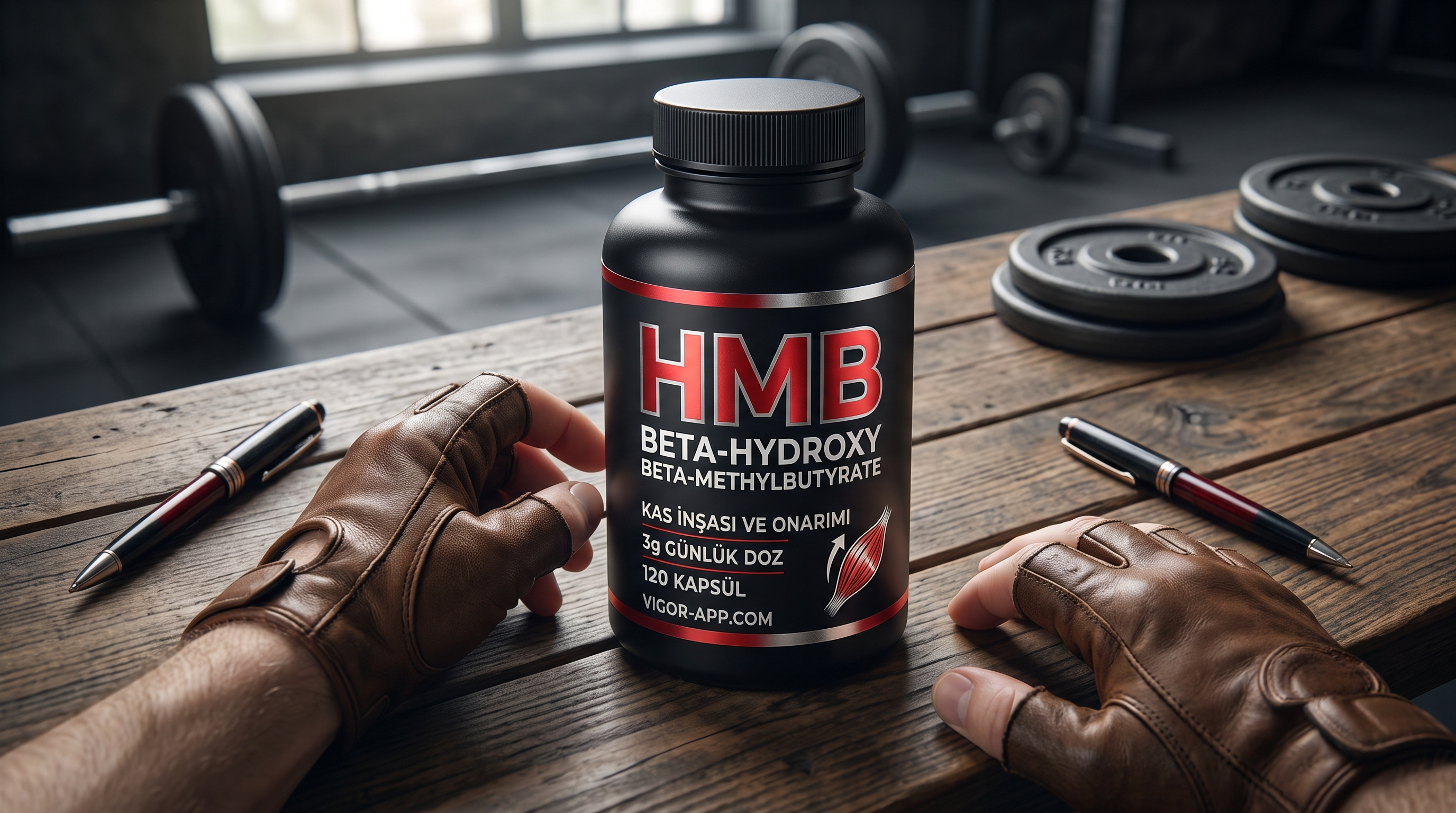
HMB — short for Beta-Hydroxy Beta-Methylbutyrate — is a metabolite your body produces naturally. It lives in the shadow of creatine on most supplement shelves, but for the right person at the right time, it can make a real difference. Who benefits, when, and how?
What Is HMB?
HMB is a byproduct of breaking down leucine, one of the three branched-chain amino acids (BCAAs). About 5% of the leucine you consume is converted to HMB; the rest follows other metabolic pathways. That low conversion rate makes it nearly impossible to get meaningful amounts from food alone — which is where supplementation comes in.
HMB works through two main mechanisms: it activates the mTOR pathway, which drives muscle protein synthesis, and it suppresses the ubiquitin-proteasome system (UPS), which is responsible for muscle protein breakdown. In other words, it acts on both ends — building up and slowing down breakdown.
What Does HMB Do? What Does the Evidence Say?
MUSCLE BREAKDOWN SUPPRESSION
Reducing muscle protein catabolism during intense training, caloric restriction, or periods of inactivity is HMB's best-supported effect. It is especially valuable in a negative energy balance.
MUSCLE GAIN IN BEGINNERS
In untrained individuals, 4–8 week studies show significant muscle mass gains compared to placebo. This effect diminishes substantially in experienced athletes.
RECOVERY
Markers of muscle damage (CK enzyme, muscle soreness) return to baseline faster in HMB groups. The benefit is clearest in high-frequency training and among people new to resistance exercise.
AGING AND MUSCLE LOSS
HMB shows promising results in sarcopenia (age-related muscle loss) research. In adults over 60, combined with resistance exercise, it has been shown to support muscle mass and strength.
How to Use HMB
Which Form?
Two main forms exist: HMB-Ca (calcium salt) and HMB-FA (free acid form). HMB-FA absorbs faster and may offer a slight edge when taken before training, but long-term efficacy between the two is comparable. HMB-Ca is more widely available and more affordable.
How Much?
STANDARD DOSAGE (RECOMMENDED)
3 grams per day of HMB. The vast majority of clinical research uses this dose.
Recommended split: Three times daily, 1 gram with each main meal. This minimizes GI discomfort and keeps blood levels stable throughout the day.
There is no strong evidence that doses above 3 g/day provide additional benefit.
When to Take It?
For HMB-Ca, no strong timing advantage has been established — taking it consistently with meals is sufficient. Some studies with HMB-FA suggest a small recovery benefit when taken 30–60 minutes before training, but the difference is marginal.
HMB vs. Creatine
These two supplements are frequently compared — but since they work through different mechanisms, the answer to "which is better" depends entirely on your profile.
| FEATURE | CREATINE | HMB |
|---|---|---|
| Primary effect | Short-duration power and performance | Muscle breakdown suppression, recovery |
| Evidence strength | Very strong (30+ years, hundreds of studies) | Moderate (strongest in beginners and older adults) |
| Best profile | Strength sports, explosive performance | Beginners, cutting phase, older athletes |
| Cost | Low | Moderate–high |
| Combined use | No known interaction; can be taken together | |
For experienced athletes, creatine is generally the stronger and more consistent choice. HMB stands out where creatine is less relevant — intense cutting phases, just starting out with resistance training, or combating age-related muscle loss.
Myths and Facts
HMB is superior to creatine for every athlete.
FALSECreatine has stronger and more consistent evidence in experienced athletes. HMB holds an advantage in specific profiles: beginners, older adults, and caloric restriction periods.
HMB directly builds muscle.
PARTLY TRUEHMB activates the mTOR pathway that drives protein synthesis, but its primary strength is suppressing muscle breakdown. "Muscle preserving" is a more accurate label than "muscle building."
HMB causes side effects.
FALSENo serious side effects have been reported at the recommended dose of 3 g/day. Mild GI discomfort occurs in some users; taking it with meals resolves this. Consult a doctor if you have pre-existing organ conditions.
HMB is only for bodybuilders.
FALSEEvidence supports benefits for older adults experiencing sarcopenia, individuals recovering from injury or illness-related inactivity, and anyone managing long-term caloric restriction — not just competitive athletes.
Higher doses mean better results.
FALSECurrent research does not support additional benefits above 3 g/day. Taking more simply means unnecessary expense and potential GI discomfort.
Frequently Asked Questions
What is HMB?
Beta-Hydroxy Beta-Methylbutyrate (HMB) is a metabolite produced when your body breaks down leucine. It stimulates the mTOR pathway to drive muscle protein synthesis and suppresses muscle protein breakdown. It is especially useful for beginners and during caloric restriction.
How much HMB should I take per day?
The evidence-based standard is 3 grams per day, ideally split into three 1-gram servings taken with meals.
Can I take HMB and creatine together?
Yes. They work through different mechanisms and no interaction has been reported. Creatine supports performance; HMB supports recovery and muscle preservation. Combining them is a logical stack.
How long before HMB starts working?
Recovery effects can often be felt within 2–3 weeks of consistent use. For changes in muscle mass, 4–8 weeks of regular supplementation and training are needed. Keeping a training log is the best way to track real progress.
Is HMB good for beginners?
Yes. Beginners are among those who benefit most from HMB. Research during the early adaptation phase of resistance training shows it supports both muscle gain and recovery.
HMB and Training Tracking
The most reliable way to evaluate HMB's effect is with data. Use VIGOR to log the day you start supplementing, record your sets and reps, and monitor your weekly 1RM trends. During a cutting phase, tracking strength curves lets you see objectively whether you're preserving muscle or losing ground.
This content is for general informational purposes only and does not constitute medical advice. If you have any health conditions, consult your doctor before starting any supplement.